How Do You Get a Poker License? A Practical Guide for New Operators
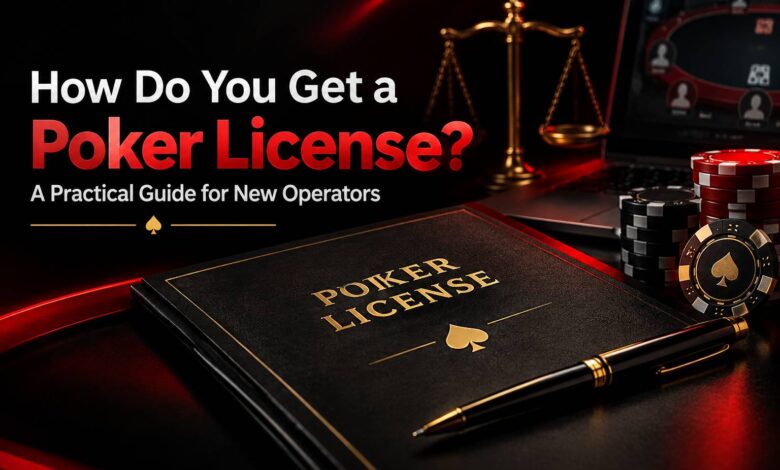
When planning your online poker operation, this issue will arise well before you arrange for your first poker table. And the matter is usually neglected because it requires attention from the very beginning. Below is an overview of key aspects in this regard: steps taken by a new poker company, primary jurisdictions, what licensing commissions evaluate, costs and timeline considerations, but there isn’t a general figure here.
The material presented here is for informational purposes only and shouldn’t be regarded as professional legal advice. Regulations applicable to poker licence vary greatly between different regions and may be subject to change without notice. Before choosing the target jurisdiction, contact an experienced lawyer specializing in gambling legislation in your intended region
Why Does a Poker License Come Before Everything Else?
Many operators treat getting the license simply as another necessary checkbox to fulfill after creating a product. However, such an approach leads to mistakes since this step is located upstream of other processes and influences other parts of operation, including market selection. Here is the full list of areas affected.
Which Countries Can I Serve With My License?
A license operates under specific jurisdictions, depending on regulator requirements and regional regulations. Not every jurisdiction recognizes foreign licenses, so a valid license in one place may be invalid in another. This is why a license determines market access possibilities.
How a License Affects Your Business
Having a license requires dedicated personnel for compliance tasks, contract negotiations, and direct accountability in operations. Running operations via a partner license results in minimal involvement but loses some autonomy. These two models have different organizational structures and financial statements.
How a License Affects Your Business
A license approval involves a unique timeline managed by the regulator. Unlike software development milestones, it’s impossible to speed up the process according to internal company plans.
Payment Processors and Licenses
Financial services providers and payment processing firms ask about license details during the onboarding process.
Building the Platform First
Sometimes, even after months of developing a poker platform, a new operator faces difficulties choosing the initial jurisdiction. Only then does it discover that its target audience demands particular regulatory requirements that weren’t taken into account during development.
Getting Your Own License vs. Partnering
There are two ways to go.
Getting Your Own License
Approving your platform as the operator yourself involves applying directly to the regulatory body and passing corporation checks. You’ll show your security standards and processes to prove compliance. If your application passes, you’ll take full responsibility before the regulator for all activities on the platform. This option allows full independence in developing your brand, maintaining the client list, and making regulations.
Launching Under Someone Else’s License
This is how many poker skin operators do. You start with a provider or partner who already has a license, often with a revenue share or fees. This route is faster and less burdensome on compliance efforts at the beginning. But there are trade-offs, of course. However, it comes with trade-offs: you’re limited by your partner’s license scope, commercial terms, and compliance structure.
Determining the optimal solution is difficult because everything depends on your purposes, budget, marketing strategy, and future plans. Some operators initially operate under another company’s license until they achieve growth that makes licensing beneficial.
Now let’s clarify how poker skins function compared to developing an independent poker room and understand the nuances in this issue.
Which Model Fits: Own License or Partner License?
Consider two startups entering the poker market. One company wants full control over its brand, technology, and player relationships, so it invests in its own license. Another company wants to test market demand faster and chooses to operate through an established licensed partner. Both approaches work, but they involve different levels of cost, control, and responsibility.
Which Countries Issue Online Poker Licenses?
A few jurisdictions repeatedly come up. What follows is a general, public-knowledge snapshot, not a recommendation, and details shift, so confirm current rules with the regulator or your attorney.
Is a Malta Gaming Authority License Worth It for Poker?
EU member state with a well-developed regime based on its Gaming Act. It’s widely considered one of the most stringent regulatory bodies, making the MGA license valuable to payment partners and players. The MGA distinguishes game servers from game technology providers.
Can You Still Get a Curaçao Poker License?
Curaçao has a master-license and sub-license arrangement – for years, this has been the best option for quickness and lower expenses. However, Curaçao has undergone significant licensing reforms, moving away from the previous master license model toward a more centralized regulatory framework. Operators should verify the current requirements before applying. If you come across an older guide on the subject of sub-licensing, it is outdated and should be carefully validated.
What Is an Isle of Man Gambling License Like?
The Isle of Man has overseen online gambling since the early 2000s. It’s a small, established jurisdiction with a reputation for rigor, and it suits operators who want a conservative, well-regarded base.
Is Kahnawake Still a Common Choice for Poker Operators?
Located in the Mohawk Territory of Kahnawà:ke, near Montreal, the Kahnawake Gaming Commission has been part of poker’s history since the late 1990’s. Over the years, several popular poker rooms have graced its premises.
There are two other things to note. Many markets have their own systems, for one. Operators in the UK are licensed to play in Britain and in the United States there is no federal poker license, each state with online poker has its own rules and operators tend to play in a licensed casino partner. Secondly, a license from one regulator doesn’t carry over to another market automatically. Always start from the country where your players live.
What Are the Online Poker License Requirements?
Each regulator will have its own checklist, although the themes reoccur. The wrinkle comes with poker – the game is played against fellow players, not the house, which is why game integrity is a big concern for regulators.
Do Regulators Check Owners and Directors?
Owners, directors and key personnel are checked for fitness and propriety and there will be a requirement for you to demonstrate the origin of your funds.
What KYC and AML Rules Apply to Poker Sites?
Confirming player identity, tracking transactions, noting and reporting suspicious activity. This typically becomes the greatest burden after launch.
How Does a Poker Site Prove Its Games Are Fair?
Shuffling must be random and fair, and can be verified by an independent testing laboratory, like GLI or iTech Labs. Poker: Players are likely to ask about spotting collusion, bots, and multi-accounting.
How Must Player Money Be Held?
Player’s money typically should be held separately from the business’s operating money, and regulators want to be confident that it would be safe if the business were to have financial difficulties.
What Responsible Gambling Tools Are Required?
Limits on deposits, self-exclusion, reality checks, and pathways to help.
What Security Standards Do Regulators Expect?
Where and how they store information, how they process payments and how they protect themselves from being breached.
Each of these should have written policies, evidence of implementation, and staff members with knowledge of the policies. A common failure point is having a polished product without the compliance processes and operational controls behind it.
How Long Does a Gambling License for Poker Take, and What Does It Cost?
Plan on a monthly basis, not weekly. No matter how fast the pace is in a jurisdiction, there is the preparation of documents, background checks, system review and a few back-and-forths with the regulator and one of those can go wrong. More stringent regulators can take much longer. Overly fast schedules typically result from not taking the time to take required steps that the regulator will require you to repeat later.
No single number would give you a good idea of the cost, as it varies significantly by jurisdiction. You will have to pay several fees, including application fees, license fees upon approval, legal fees, technical certification and audits, compliance staff or external compliance services and possibly needing a local presence or director. It is a cost center and sometimes a delay itself to set up a bank account and configure payments.
If you’re being honest with yourself, there are at least two or three jurisdictions you’re considering shortlisting, to which you’ll consult with a gaming attorney for updated fee schedules and realistic timeframes for each, and you will add some cushion. Then examine the first-year picture, particularly the application fee, since it’s the ongoing costs that catch out first time operators.
Can Poker Software Help You Get Licensed Faster?
If you’re intimidated by the prospect of constructing your own compliance side, then a software provider can take over the task. As-Nas says its platform is designed to be a “licensing-ready framework”: the regulatory foundation is already there, and it allows operators to focus on growing their business rather than on paperwork.
A structure such as this does not substitute for a license, nor does it substitute for legal advice. You still need the proper authorization for your market and you still need a lawyer to determine what that authorization is. What it can do is reduce the time required to decide to launch and then get ready to apply, without having to build up the core compliance pieces at the same time.
When considering what to do, speak to the As-Nas team about the framework and the track you’re considering.
Once more this article is informational and not legal advice. Contact a licensed gaming lawyer for your jurisdiction’s requirements.




 English
 Hebrew
 Russian
 Korean
 Mongolian
 Turkish
 Italian