Poker Bot Detection 101: What Every Operator Should Have in Their Platform
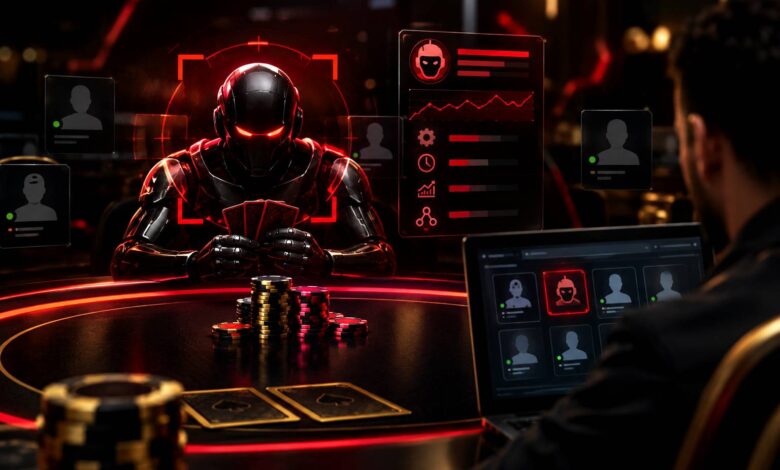
Most operators agree that bots are bad for a poker room. Fewer can say what, specifically, their platform does about them. “We take fair play seriously” is a sentence; poker bot detection is a system. This guide is a practical primer for operators who are choosing or reviewing покерное программное обеспечение and want to know what a credible anti-bot setup actually contains.
It won’t hand out a recipe for beating detection, and it doesn’t promise that any platform can catch everything. What it does offer is a clear picture of the layers involved, the signals worth watching, and the questions to ask a software provider before you commit.
Why Detection Is a Platform Feature, Not a Support Task
It’s easy to picture bot control as a manual job: a few fair-play staff reading hand histories when a player complains. That model breaks down quickly. A bot doesn’t need to be obvious in any single hand, and by the time a complaint reaches support, the account may have been running for weeks.
Effective detection therefore has to be built into how the platform records and surfaces player activity. Staff still make the decisions, but the platform has to give them something to decide with: behavior data in a usable form, flags that point to accounts worth a closer look, and tools to act on what they find. If you’re new to why this matters commercially, our overview of how AI poker bots undermine player trust covers the business side.
The Four Layers of a Credible Anti-Bot Setup
Rather than a single “bot detector,” think of fair-play protection as layers that support each other. Any one layer can be worked around; together they make automated play expensive and unreliable to run.
1. Behavior monitoring
This is the core of most poker bot detection: looking at how an account plays and behaves over time rather than judging single hands. Humans are inconsistent in ways software tends not to be, so patterns across many sessions are far more informative than any individual decision.
2. Account and session controls
Bots usually depend on running many accounts, many sessions, or very long sessions. Tools that let operators review account relationships, session patterns and login behavior make that harder to hide, and they help with related problems such as multi-accounting.
3. Collusion and fraud monitoring
Bots aren’t the only integrity risk. Players coordinating with each other, whether by chip dumping or sharing information, damage the game in a similar way. A platform that treats anti-collusion and anti-fraud monitoring as part of the same system gives operators a single view of table integrity rather than separate tools that don’t talk to each other.
4. Admin controls and enforcement workflow
Detection only matters if someone can act on it. Operators need back-office tools to review flagged accounts, apply restrictions, document decisions and apply policy consistently. Without a workable enforcement workflow, even good signals just pile up.
Common Signals Operators Should Look At
No single signal proves anything, and a good fair-play process treats them as reasons to look closer, not as verdicts. The table below lists the kinds of behavior that commonly raise questions, and why each one matters.
| Signal | What it can indicate | Why it’s not proof on its own |
|---|---|---|
| Very uniform decision timing | Automated play, where response times vary little between easy and difficult decisions | Some human players use shortcuts or play quickly by habit |
| Unusually long or continuous sessions | An account that never rests, which a person rarely does | Dedicated grinders do play long sessions |
| Win rate out of line with stakes and volume | Play that is consistently better than a typical player pool at that level | Strong human players exist at every stake |
| Rigid, repetitive patterns across hands | Scripted decision logic that doesn’t adapt the way people do | Disciplined players can be very systematic |
| Linked accounts or shared login characteristics | One operator running several accounts or sessions | Households and shared devices can look similar |
| Play that looks human but is unusually “solved” | Possible real-time assistance rather than a bot | Well-prepared players can study the same solutions |
The last row deserves a note of its own. Detecting fully automated bots is one problem; spotting a person who is receiving live assistance is a harder one, because the behavior looks human. We cover that separately in our article on RTA tools and the hidden risk inside your player base.
Why Layers Beat Any Single Technique
Anyone who runs a bot has an incentive to learn what detection looks for and adapt. That means a platform relying on one method is always one workaround away from being blind. Layered protection helps in three ways:
- It reduces false certainty. A flag from one layer, supported by another, is far more reliable than either alone.
- It raises the cost of cheating. Running a bot that also has to look like several unrelated human accounts, behave inconsistently and avoid collusion patterns is much more work than running a bot alone.
- It protects honest players from wrongful bans. Because no single signal is treated as conclusive, operators have room to review before acting, which matters for the player relationship as much as for fairness.
What to Ask a Poker Software Provider
When you’re comparing platforms, vague reassurance is the main thing to watch for. These questions help separate a provider that has built fair-play infrastructure from one that has written a paragraph about it:
- What fair-play and anti-fraud tools exist in the back office today? Ask for a walkthrough of what operators can actually see and do, not a feature list.
- How does the platform handle collusion as well as bots? Table integrity covers both, and they should be addressed together.
- What can my team do once an account is flagged? Review, restrict, document and escalate should all be possible without writing custom tools.
- How much control do operators have over fair-play settings? Rules and thresholds differ between brands and markets, so configurability matters.
- Does this work the same way across multiple brands? If you plan to run more than one room, ask how fair-play tooling behaves across a shared backend.
- How are updates handled as new cheating methods appear? Detection isn’t a one-time installation, so ask how the provider keeps pace.
Be cautious about any provider who promises that bots will never appear on their platform. A better sign is a provider that explains what it monitors, what operators can do about it, and where human review still matters. The stakes are commercial as well as technical: see why bot-friendly poker platforms lose serious players for what weak fair-play tooling costs in retention.
Detection in a Multi-Brand Setup
Operators running several branded rooms on one backend face an extra consideration: a bot or colluding group doesn’t need to stay inside one brand. When rooms share infrastructure, fair-play visibility across the whole network is an advantage, because patterns that look minor within one skin can look very different when viewed together. If that’s the model you’re planning, it’s worth asking how fair-play monitoring works on a multi-skin poker network before you decide.
How AS-NAS Approaches It
AS-NAS builds fair play into the core of its poker platform rather than adding it afterwards: anti-fraud and anti-collusion monitoring, account behavior tools, and a back office with admin controls that give operators the means to review accounts and enforce their own policies. Specific configuration depends on the product line and the project, so the most useful step is a conversation about your setup.
Where to Start
If you’re auditing an existing platform or choosing a new one, start with the four layers above and ask where each one is covered. Gaps become obvious quickly, and they’re much cheaper to address before launch than after a trust incident. To discuss how fair-play tooling would fit your operation, you can talk to the AS-NAS team.




 English
 Hebrew
 Russian
 Korean
 Mongolian
 Turkish
 Italian